I use nonlinear dynamics and complex systems to research      

About me

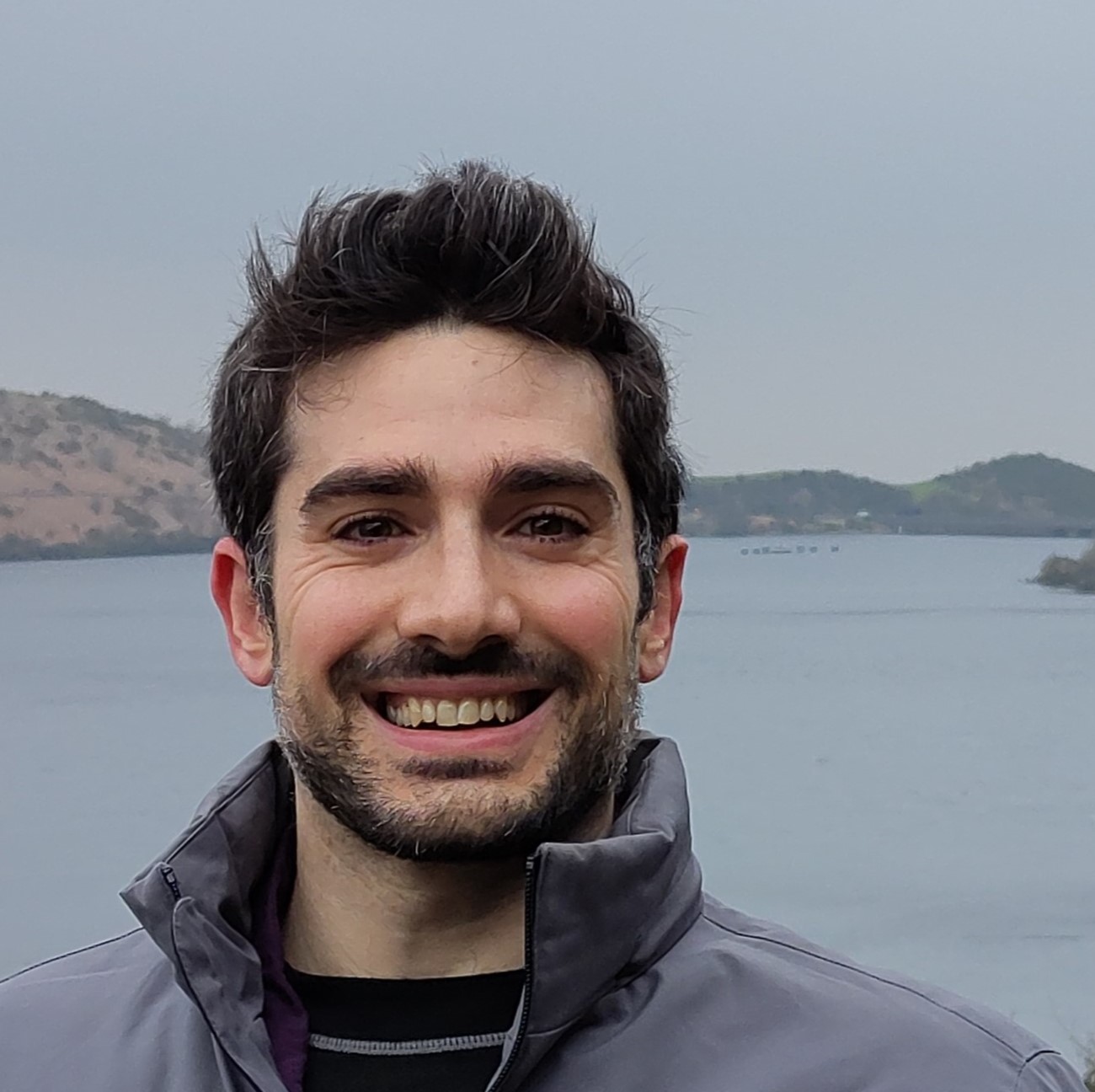
Hello! I am George Datseris (he/him), Senior Lecturer in the Department of Mathematics and Statistics at the University of Exeter and lead developer for the JuliaDynamics GitHub organization.

Career summary: During my PhD I worked on classical and quantum electron transport in graphene nanodevices, but also nonlinear dynamics, nonlinear timeseries analysis, and music fluctuations and their human perception. After my PhD, I decided to fundamentally change my primary focus into climate science. To this end I joined the Max Planck Institute for Meteorology as a Postdoc. This substantial career change was challenging, but I was able to bring valuable new perspectives from nonlinear dynamics and complex systems into climate science, primarily the study of large-scale cloudiness and its interaction with the energy balance of the Earth system. At the end of my postdoc, I wanted to carry on working in clouds & climate but also connect more with my roots in nonlinear dynamics and physics. I won two fellowships to support this: the Royal Society International Newton Fellowship and the Marie Sklodowska Curie Postdoctoral Fellowship. They brought me to the University of Exeter, where I combined my passion for developing conceptual understanding of the physical world with understanding the interplay between clouds and climate. The majority of my research is split between nonlinear dynamics and cloud-climate interactions. On one front, I am developing a completely new perspective for understanding the response of dynamical systems to finite perturbations and to changes in their parameters. On the other front, I combine conceptual climate models, satellite and in-situ data, and large eddy simulations, with the goal of understanding how clouds respond to change or generate themselves change in the climate system. My current research focus is the treating clouds as systems capable of undergoing critical transitions, and what this means for the climate system and other so-called tipping elements.

Research

Feel free to contact me if you want to work with me; I am also happy to support funding applications!
And if you are a student looking for a supervisor, I have a variety of topics to choose from climate modelling to music timeseries analysis!

Primary research focus

  • Clouds and climate: conceptual modelling, sensitivity, and critical transitions. Clouds are both beautiful and one of the most important components of the Earth’s climate. My research focuses on understanding how clouds change and generate change in the climate system. To do this I model clouds as multistable systems capable of undergoing critical transitions on a wider scale. I incorporate analysis of low-dimensional nonlinear models, large eddy simulations, and observational data. My main goal is to identify under what circumstances clouds undergo critical transitions, what is the impact of this on the climate system, and whether we can forecast such events.
  • Nonlinear dynamics: multistability, continuation, multi-parameter spaces. Nonlinear dynamical systems are used to model everything, from power grids to clouds. My work focuses on multistable models, where alternative states can co-exist, and critical transitions can be generated across such states. My research revolves around how to study multistability as system parameters vary. To this end I have developed the groundbreaking technique of global continuation, a way to continue information from the whole state space across an arbitrary parameter curve. I am now focused on scaling these methodologies to multi-parameter spaces to provide tools for studying realistic complex systems that often depend on 10++ parameters.
  • Timeseries analysis: from linear to associative. I’ve applied timeseries analysis on a variety of real world data, from satellite radiance measurements to stock market prices and timeseries of live music performances. I’ve accumulated a large toolset for timeseries analysis: linear (spectral filters, autocorrelations), power-law (Levy walks / DFA), autoregressive (ARMAs), decomposing (PCA/DMC), nonlinear (delay embedding, fractal), complexity-based (sample, permutation entropies), surrogates hypothesis testing, geospatial (variograms), change point detection / early warning signals, and associative (causal). My latest timeseries project is applying associative timeseries analysis to create a graph of “causal” cloud controlling factors for understanding the coupling of cloudiness to the broader environment.

Software

I am the lead developer of JuliaDynamics., a GitHub software organization for dynamical and complex systems software written in Julia. Started in 2017, it now has ~60 repositories (software) and ~40 members (regular contributors).


During this journey, I have lead-developed over 20 individual software packages, most in JuliaDynamics, but some in JuliaClimate and JuliaMusic. The most impactful ones (by my judgement), are:


  • DynamicalSystems.jl, a general purpose software library for the entire field of nonlinear dynamics and nonlinear timeseries analysis; has by far the largest number of diverse algorithm implementations and most open-source individual contributors (~40).
  • Agents.jl, a General purpose software library for agent based modelling. It showcases exceptional performance, and is the most featureful, and simplest, general purpose open source software for agent based modelling based on an objective and publically available comparison process.
  • DrWatson, a Julia-based software for managing scientific projects, making them accessible, reproducible, and easy to use and navigate. Focused primarily on computational sciences but can be used to help any project; has 40,000 downloads (upper user estimate), one of the most popular packages for the Julia language; uniqueness of the software: useful features directly relevant for day-to-day project management while being minimally invasive and not requiring workflow alterations.
  • ComplexityMeasures.jl, a software for entropic and complex timeseries analysis, formally a component of DynamicalSystems.jl but with its own publication; it provides thousands of entropy and complexity measures out of the box, an interface for outcome spaces, and developer documentations for adding more measures.

Curriculum Vitae

Senior Lecturer

Mathematics and Statistics

Faculty of Science, Environment and Economy

University of Exeter


For more details, download a copy of my CV.

Publications

For a manually-curated list of my published articles and basic bibliometrics visit my Google Scholar page.

Contact


You're welcome to drop by my office Tuesday-Thursday!
Room number: 8.14e
Laver Building, 8th floor
Streatham Campus, University of Exeter
Exeter, EX4 4QJ, United Kingdom

Or chat with me via email: g.datseris@exeter.ac.uk